
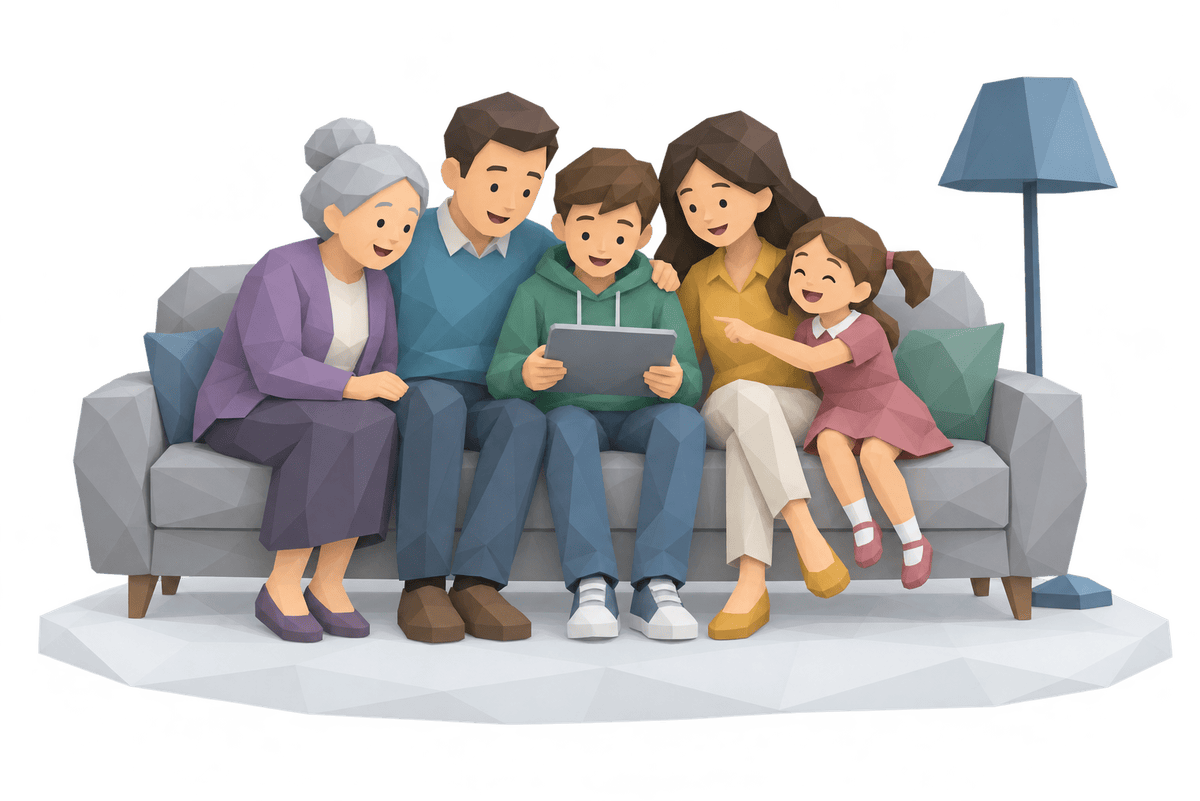

Familie Berger
Family · 5 people
Grandma as the Explorer – that made the night. We printed out all the character illustrations, and they're hanging in the kitchen now.
The Strategist, the Host, the Explorer: everyone in your group gets their character with a name and image. Then the challenge shows how the types are spread across your group – and why you work together the way you do.
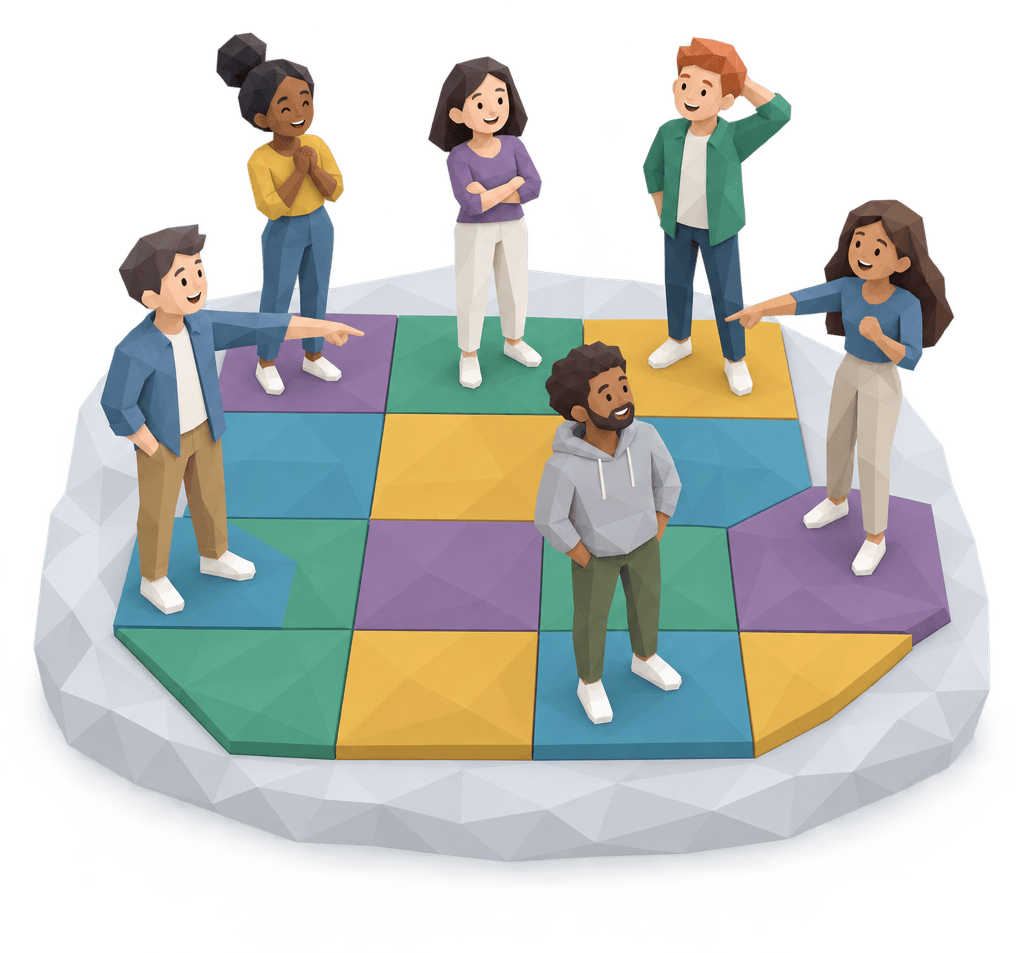
Where does your energy come from, how do you perceive the world, how do you make decisions, how do you organize your life? Four answers make a character – and sixteen of them make your group.
Who in your group recharges in the crowd and who afterwards alone? Usually the loudest person isn't the most extraverted.
Patterns and possibilities, or facts and details? The comparison explains why you talk about the same idea in such different ways.
Do you make decisions based on the impact on people or on arguments? Every group needs both – the question is who provides what.
Keep options open or lock them in? Who locks down your plans and who keeps them flexible will be clear at a glance.
A family evening
Familie Berger takes the challenge on Sunday after dinner. Five links, five characters: Dad is the Rock, Mom is the Host, the son is the Tinkerer – and Grandma, 74, is by far the most adventurous person at the table.
The group analysis reads the five types together: who supports whom, who drives whom forward, and why for the Bergers it's always Grandma who books the trips.
Sample analysis
An example with fictional names: four friends, four axes – and the realization that two of them share almost the exact same character.
Illustrative example. Your analysis will use your real names and results.
Who this is for
Hardly any test is compared as eagerly as this one. Because everyone ends up with a name – and a story to go with it.
Who is the Captain, who is the Dreamer, who is the Entertainer? After the challenge, you'll have role names that stick – and that are remarkably often spot-on.
Three generations, sixteen possibilities: often grandchild and grandmother share the exact same character – and no one ever noticed.
A team of five organizers without a single out-of-the-box thinker? The type distribution shows what you have and what you're missing.
Who needs clear goals, who needs room to maneuver? The user manuals for your types are the shortest leadership training there is.
You decide when creating: a candid mirror, or a competition with a wink.
Your profiles side by side, honest and judgment-free: what you share, where you differ – no winners, no rankings.
With rankings and awards for your group: who takes which title? Every person shines at least once – promised.
Powerhouse
Ben
Most similar duo
Mia & Sam
For teams & leadership
Every character comes with its own user manual: how to motivate them, how to give them feedback, what slows them down. For leaders, it's the fastest way to a team that feels understood – and for founders, a check to see if all roles on the team are covered.
Free to start · the in-depth group analysis is Premium
From the family dinner table to the team offsite.
Family · 5 people
Grandma as the Explorer – that made the night. We printed out all the character illustrations, and they're hanging in the kitchen now.
Team · 7 people
Seven people, four organizers, not a single out-of-the-box thinker. That explains why our brainstorming meetings always end up as to-do lists. Now we deliberately seek out pushback.
Friend group · 6 people
Twenty years after high school, finally the explanation for why we still play the same roles. By the way, our Captain is the one we always thought was the Dreamer.
Every challenge delivers more than a result – it delivers things to talk about.
The status board shows in real time who's testing, who's done – and who you're still waiting for.
All of your group's dimensions side by side: see at a glance where you match and where it gets interesting.
We show you the most similar duo and the strongest contrast – and what makes those pairings special.
Our analysis describes what each person brings to your group – appreciative, never judgmental.
No fluff: you get actionable suggestions for turning your differences into strengths.
Every person also receives their complete personal results – the challenge doesn't replace them, it adds to them.
Yes. The 16 Types Test on bejiji is completely free, and everyone sees their character with image and strengths. The in-depth group analysis with complementary pairings, duos, and tips is part of bejiji Premium – one subscription covers the whole group, seven days starting at $1.95 (incl. VAT).
Between two and eight. Perfect for couples, families, friend groups and teams – if you're more than eight, simply split into two challenges.
No. Only the person creating the challenge signs in. Everyone else just opens their personal link – no registration, no app.
Both lead to one of the 16 characters. This challenge is the quick start with 60 questions; the Personality Challenge uses the most thorough test on bejiji with 100 questions and 20 facets — for subtler nuances.
A switch when creating: turned on, your results come with awards like “Bundle of Energy” or “Rock of Stability.” Turned off, we describe your differences neutrally – no winners at all.
Sixteen possibilities, your group – start the challenge and send out the links.
Free · Invitees don't need an account